The overture BECHÆ is a musical tribute to Beek, composed specifically to mark the 175th anniversary of the “Koninklijke Harmonie St. Caecilia Beek”.
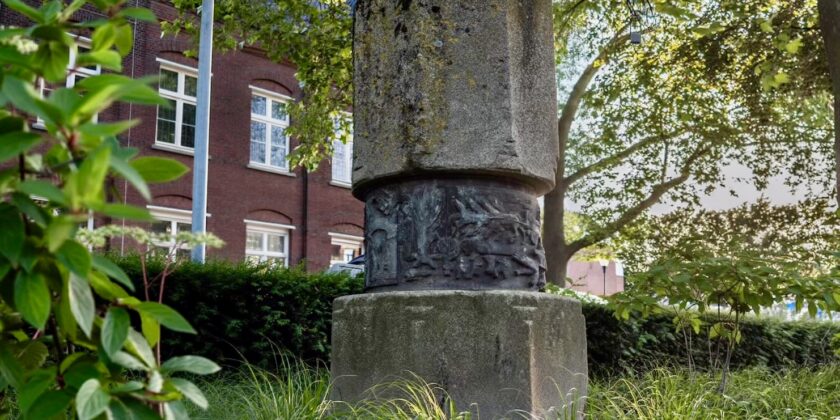
The title refers to the municipality’s medieval name. Inspiration for this work was drawn from the historic village column bearing the Latin inscription:
“Historia Bechæ continet facta et fabulas” – (The history of Beek contains facts and fables).
The work follows a classic three-part structure in which history and myth merge. The energetic, spirited outer movements give musical expression to the facta – the tangible dynamism and vibrant future of Beek and its wind orchestra, all with a festive character.
The contrasting middle section brings the fabulas to life, featuring a beautiful, lyrical solo for English horn (or alto saxophone). Supported by a rippling accompaniment that evokes the flow of the Keutelbeek stream, this expressive melody invites s moment of atmospheric reflection.
The work concludes with an exhilarating “Vivace” in which the orchestra pulls out all the stops for a sparkling finale.
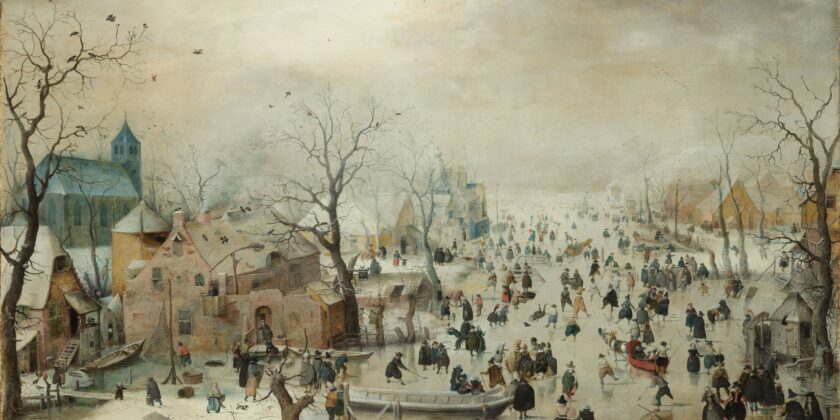
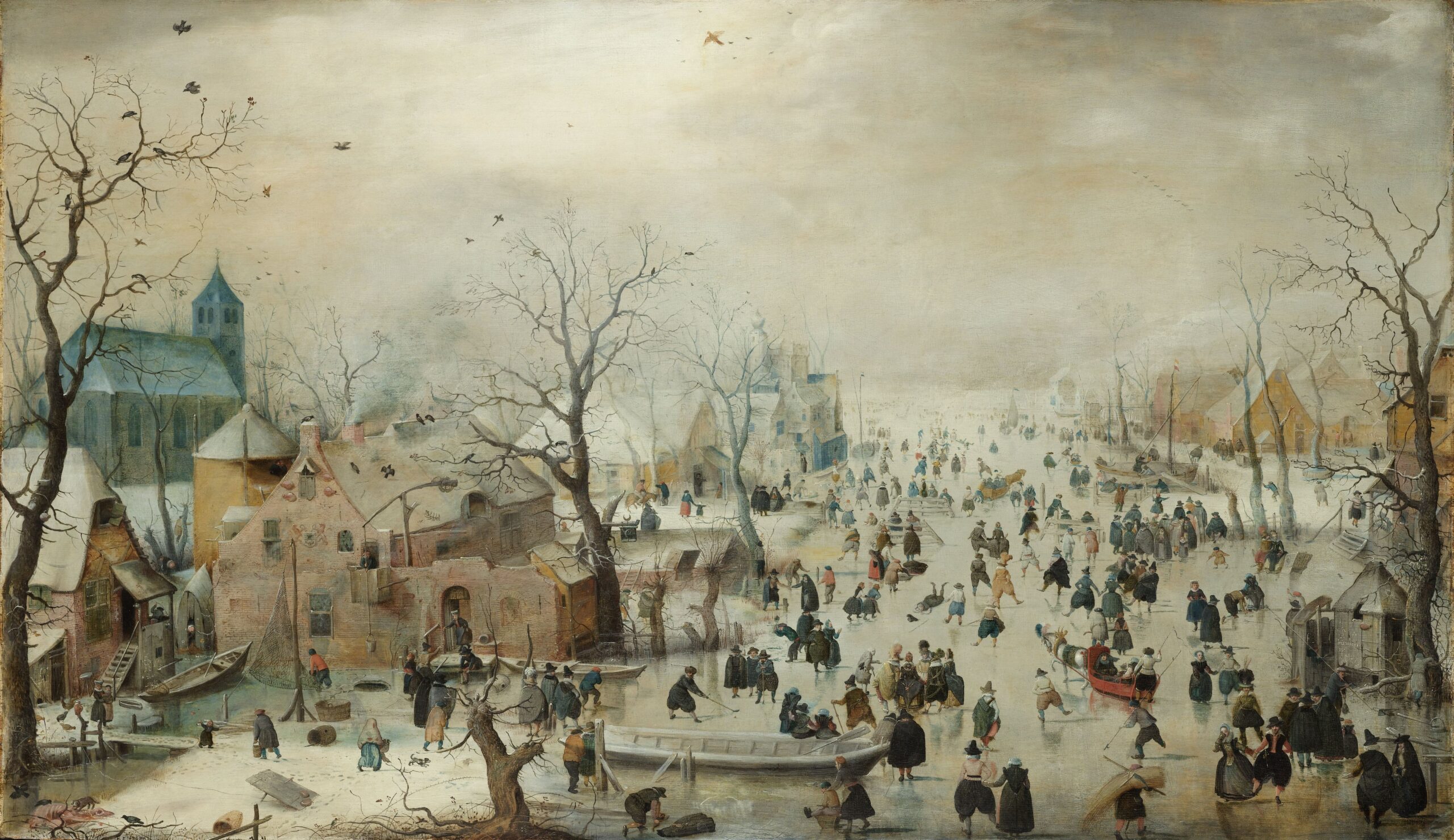
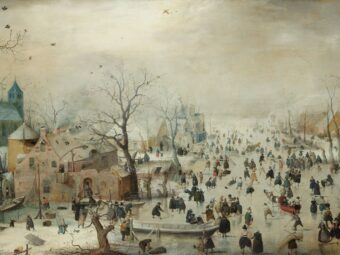
Winter scenes(Wintertaferelen in dutch) is a three-movement work inspired by the seventeenth-century masterpieces of Hendrick Avercamp. It serves as a musical canvas depicting the Dutch winter during the Little Ice Age.
The Prelude tells the story of the icy, mysterious silence of a frozen river at sunrise. The Scherzo is a feverish, hectic, and virtuosic movement in which the people on the ice are portrayed through music. The work concludes with a universal chorale that evokes the warmth and sense of togetherness of a December evening.
This work was commissioned by the Royal Netherlands Marechaussee.
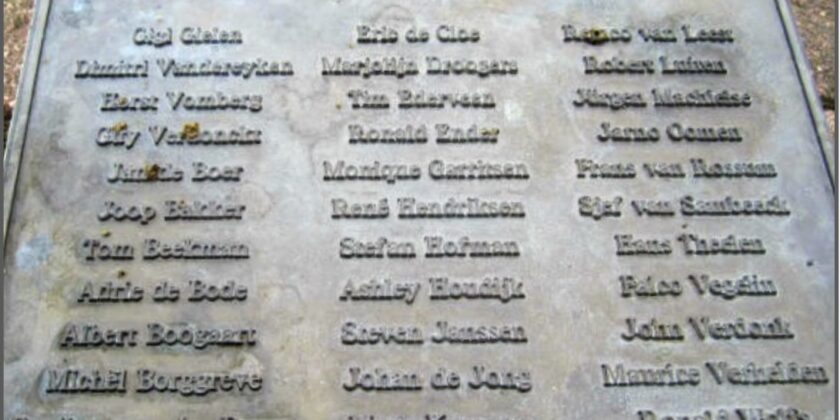
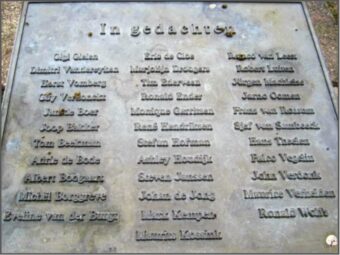
Dedicated to everyone, in any way involved in the Hercules disaster on July 15th 1996.
Commissioned by Koninklijke Militaire Kapel ‘Johan Willem Friso’.
Echoes of Time is a symphonic poem composed on the occasion of the commemoration of the 30th anniversary of the Hercules disaster on July 15th 1996.
The work consists of four consecutive parts. It opens with “Morning Light”, a colorful look back at the day it all happened. After a short introduction – where the dawning of the day turns into the grand opening theme – the story is told of the great musicians, in the prime of their lives, resuming the return journey after a successful performance by their “Fanfarekorps Koninklijke Landmacht” (FKKL).
Just as suddenly as a disaster can take place, the second part “Silence Fall” follows. After the drastic event – in which 34 musicians and crew members were killed and 7 seriously injured – it is as if time stands still for a moment. The music becomes still, as it were. A heartbeat illustrates the fight for the lives of the survivors and the dead are mourned in short recitatives.
The third part follows consecutively and tells the story as a kind of dialogue between survivors/relatives and the dead. This “Cantilene” is a remembrance of the lost, where time softens the wounds but does not erase them. The part ends grandly, where, as it were, a tribute is paid to all the victims.
In the final part “Permanent Echo”, the memories of the past are translated into a message that leaves a sense of hope and remembrance.
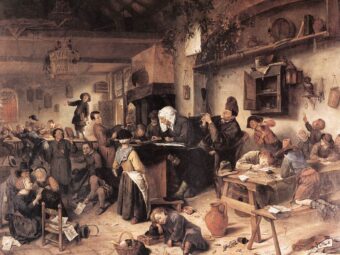
“The Village School” a frivolous and colourful overture for wind band. The work, originally for orchestra (titled as “Regalo Festivo Ouverture”) was commissioned by the University Orchestra Maastricht and serves as a prelude to its concerts.
This version for wind band is also freely inspired by Jan Steen’s painting “the village school”, in which the everyday chaos within a classroom can be felt. It is also a reference to the connection with the university, where students experience their hopefully best time of their lives that eventually leads to a successful career. In the work, the various musical themes develop into a grand apotheosis.
commissioned by Windband St. Agnes Bunde on the occasion of the festive opening of the “Agnespoort” in Bunde (NL)
A short festive overture on the occasion of the festive opening of the “Agnespoort” in Bunde (NL). The work is based on two motifs that relate to the village of Bunde and its wind orchestra St. Agnes Bunde.
The work opens with a motif based on the song “Gans Bung” (which means “whole Bunde”) with a driving and powerful accompaniment.
The second motif is based on an “Andante Religioso”composed by one of the former conductors of Harmonie St. Agnes Bunde, Mr. August Hautvast.
After this short but sparkling opening, a more subdued section follows in which the musical link to the Patron Saint “St. Agnes” is made.
The overture ends with a resume of all motifs, resulting in a spectacular ending.
Composed on behalf of the Roermond Orchestra “De Symphonie”, in memory of all victims of war(s), on the occasion of 80 years of annual national commemoration in the Netherlands of the victims of the Second World War on May 4.
The work makes a musical link with the present, in which geopolitical tensions are increasing and history threatens to repeat itself.
The work will have its premiere on May 4, 2025 by the Roermond Orchestra “De Symphonie” conducted by the composer.
Divertimento is a concerto for clarinet and wind orchestra freely inspired by portraits of Frans Hals.
Frans Hals (﹡1582/83 – ✝︎ 1666) is one of the most important painters from the Dutch Golden Age. He is especially appreciated for his loose touch and lively portraits of contemporaries, genre scenes and colorful militia pieces.
As early as the 17th century, people were struck by the liveliness of Hals’ portraits. Hals’ works contain such power and life that it seems as if the painter “seems to challenge nature with his brush”.
In this Divertimento, the solo clarinet takes us into an imaginary story behind the painting, in which the person in question plays the leading role. After a short introduction, a colorful parade of people and their stories is created based on these portraits;
The Rommel Pot player (1618-22)
The singing girl (1626-30)
The laughing cavalier (1624)
The lute player (1623-24)
The young violin player (1625-30)
The merry drinker (1630)
“Malle Babbe” (1633-1635)
A young woman with a glass and flagon (the inn-keeper) (1635)


 First Time I Saw / Digital Set€ 250,00 incl. VAT