‘Der Rosenkavalier’, Op. 59, is a comic opera in three acts by Richard Strauss to an original German libretto by Hugo von Hofmannsthal. It was first performed at the ‘Königliches Opernhaus’ in Dresden on 26 January 1911 and the opera became immediate and profound popular.
As one would expect of a commercial hit, the music was pressed into all manner of use through arrangements and transcriptions. Strauss produced the earliest orchestral extract himself in 1911, directly on the heels of the premiere; he titled it ‘Walzerfolge Rosenkavalier 3. Akt’ (‘Waltz Sequence from Rosenkavalier Act 3’) which in the end was entitled as ‘Walzerfolge No. 2’ (‘Waltz Sequence No. 2’).
In the summer of 1934 Rachmaninoff composed the ‘Rhapsody on a Theme of Paganini’ at his summer home, the Villa Senar in Switzerland.
It’s a concertante work written by for piano and orchestra, closely resembling a piano concerto in a single movement.
After a brief introduction, the first variation is played before the well known ‘Paganini theme’ and then followed by the other 23 variations.
The work is performed in one stretch without breaks but it can be divided into three sections. These correspond to the three movements of a concerto: up to variation 10 corresponds to the first movement, variations 11 to 18 are the equivalent of a slow movement, and the remaining variations make a finale.
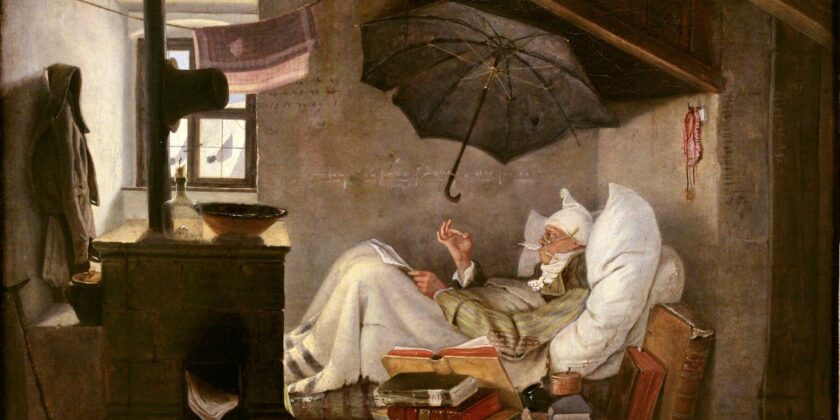
“Der Arme Poet” (painted 1839) in is the most popular painting by the German Painter Carl Spitzweg.
In 1839, Spitzweg was a beginning artist who in the 1830s lived for a long time on the top floor of a house in old Munich, from which he wrote in one of his letters: “The view is great, the roofs resemble a large mountain range, with the chimneys and attic windows like ruins and castles”.
The influence of the Biedermeier style is easily recognizable in the painting. The typical pursuit of a bourgeois bohemian existence is reflected in the various attributes. In combination with the poor environment the whole gives a parodical appearance.
The poems that were once thought to have eternal value are sacrificed to the stove as soon as they can provide some warmth.
Characteristic of the painting is the quill that holds the poet clamped between his teeth, indicating that he continues his work unrelentingly.
Above his bed you can see a hexameter scheme, which indicates the meter of verse. Next to his bed is a stack of classical books with inscriptions such as “Gradus ad Parnassum”, which represent the high ideals of the artist.
Between his fingers he seems to crush a flea, which expresses the banality of the situation.
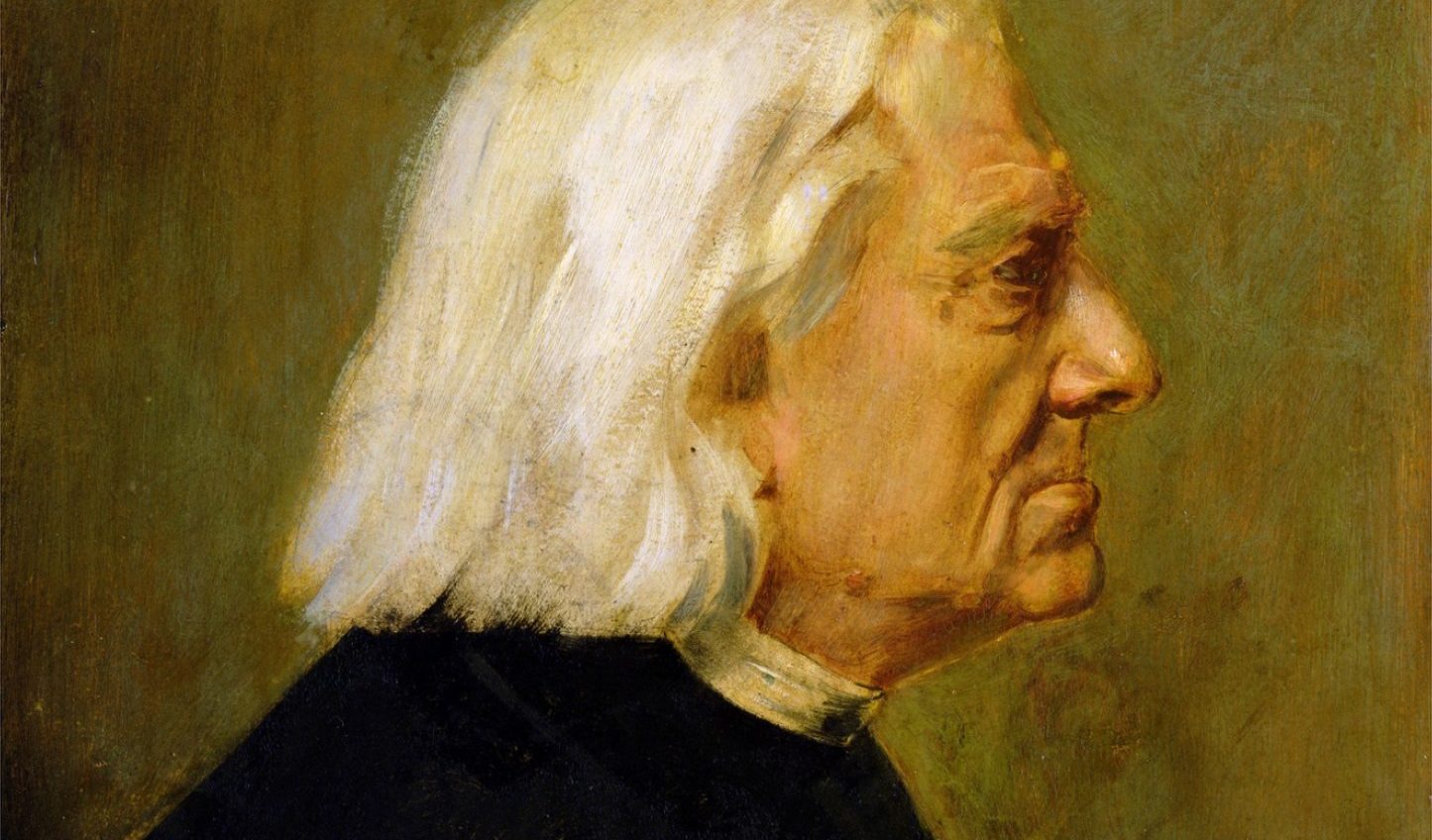
The Hungarian-born composer and pianist Franz Liszt was strongly influenced by the music heard in his youth, particularly Hungarian folk music, with its unique gypsy scale, rhythmic spontaneity and direct, seductive expression.
‘Hungarian Rhapsody No. 2’, is the second in a set of 19 Hungarian rhapsodies Liszt composed but it is by far the most famous of the set. It was dedicated to Count László Teleki and first published as a piano solo in 1851.
Its immediate success and popularity on the concert stage led to an orchestrated version, arranged in 1857–1860 by the composer in collaboration with Franz Doppler.
For this transcription I used as well the Doppler version as the version by Müller-Berghaus.
Leoš Janácek (1854-1928) was a Czech composer, musical theorist, folklorist, publicist and teacher. He was inspired by Moravian and other Slavic folk music to create an original, modern musical style.
The ‘Lachian Dances’ (Lašské tance) was Janácek’s first mature work. The work is split into six separate dances:
1. Starodávný I (Old Time Dance I), 2. Požehnaný (The Blessed), 3. Dymák (Smoke Dance), 4. Starodávný II (Old Time Dance II), 5. Celadenský (Celadna Dance) 6. Pilky (The Saws)
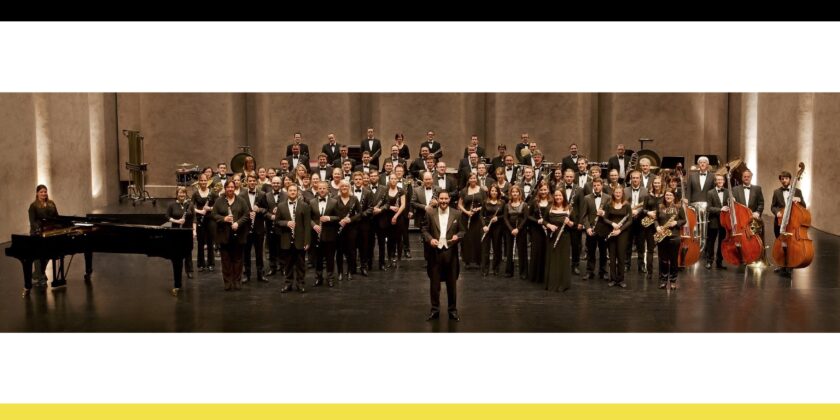
Festmusik des LBO is a festive overture in which the new logo of the Landesblasorchester Baden-Württemberg is explained in musical way in three parts without intermission.
The overture starts as a surprise, just walking into the beautiful land of Baden-Württemberg, a partial republic of Germany. Standing for Movement and Rhythm.
The main theme a proud, passioned theme – its all about the people working at LBO – starts and flows into the second theme based on the typical opening of the song Loblied der Badener. The use of many different pitches and scales are a metaphor for Highs and Lows.
After this another folksong of Baden-Württemberg is integrated, the more lyric Hohenzollernlied. The use of both of these folk-themes are standing for Name, Values and Home.
In the second part both folksongs are used in the thematic material. In this part the music is build up into a passioned and majestic climax. All the Emotions and Passion reach their maximum of musical perception.
In the third part all thematic material is re-used in a fugatic way finding their way, everything combining, into a virtuous coda – just as the new logo is doing into one picture.
Of course the title of the overture is referring to the jubilee of 40 years of this great orchestra; Landesblasorchester Baden-Württemberg(LBO).
This piece was the winning composition of the composition contest Logo in Sound as held by the Landesblasorchester Baden-Württemberg (2018)
Live Performance registration by “Royal wind band “de Kunstvrienden’ of St. Niklaas (B) – Peter Snellinckx, conductor – Eline Van den Broeck, solo horn
Concerto for Horn and Wind band.
In the Chinese mythology there are four heavenly animals.
The Chinese Dragon
The Phoenix
The Turtle
Ki-Lin (unicorn)
In this concerto for horn all of these heavenly animals are presented. The hornist is a kind of storyteller and evaluates to a mythical creature as well. The concerto contains four movements:
1. The Chinese Dragon – (Long)
The Chinese dragon is one of the four heavenly animals and would also be the founder of the Imperial Family.
Dragon Queens provides rain, rivers, lakes and seas. They represent wisdom, strength and goodness. An angry Long Wang causes storm, fog and earthquakes. He protects fishermen and watercourse, but punishes wasters of water. One of them is Pan Long, it lives in the ocean. It seems to be the seahorse we all know today.
2. The Phoenix – (Feng Huang)
His song would be the source of the Chinese scale. Feng Huang lives with Ki-Lin (see also 4th movement) in the Hills of Vermilion. Only in peaceful times, or when a great wise or good emperor is born, the Feng Huang leaves the Land of Immortals to announce prosperity, accompanied by many other birds who honour him as the most beautiful.
3. The Turtle – (Wugui)
The Turtle is one of the animals who was involved in the origin of the earth. It is seen as an oracle.
4. The Unicorn – (Ki Lin)
The unicorn is an animal with male (Ki) and female (Lin) powers. It’s voice is like a church bell. It was born in the heart of the earth and lives behind the clouds. It appears only to announce important events or births. (Just like Feng Huang (2nd movement)).