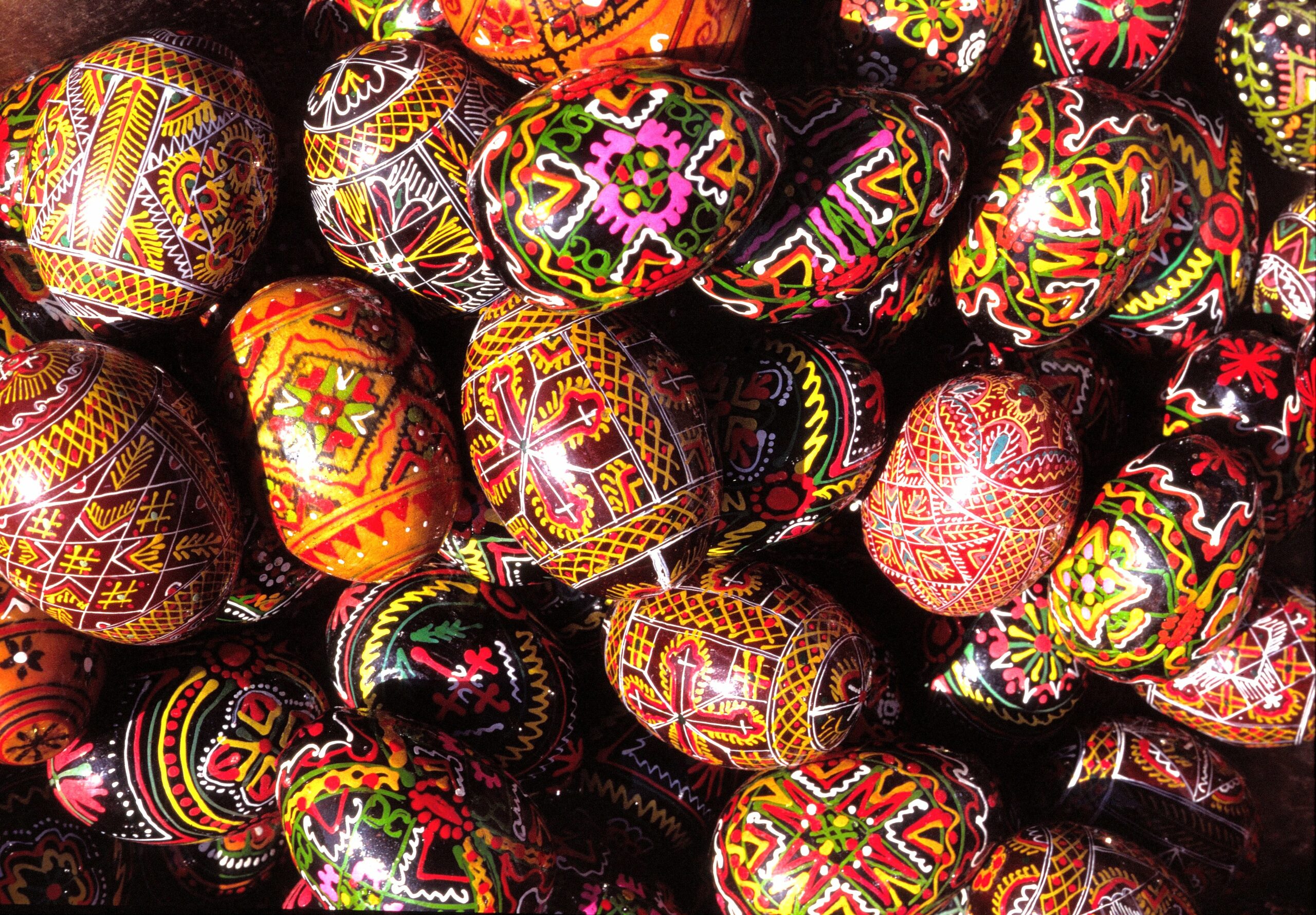
‘Russian Easter Festival Overture’ (La grande Pâque russe), is a concert overture written by the Russian composer Nikolai Rimsky-Korsakov in 1888. It is based on themes from the ‘obikhod’, which is a printed collection of the most important and most frequently used canticles of the Russian Orthodox Church. The overture begins with a long introduction of a very slow tempo in which the voice of an archangel is represented by a dark trumpet solo. The slow introduction is followed by joyous allegro conveying a sense of excitement.
Alexander Glazunov (1865 – 1936) was a Russian composer, music teacher, and conductor of the late Russian Romantic period.
In 1899 Glazunov composed the music for the ballet ‘The Seasons’. It’s is an allegorical ballet in one act, four scenes, by the choreographer Marius Petipa. The work was first performed by the ‘Imperial Ballet’ in 1900 in St. Petersburg and has become one of Glazunov’s best compositions. ‘L’Automne’ is the fourth scene (tableau) of the ballet also known as the ‘Autumn Bacchanale’ (Grande bacchanale des Saisons).
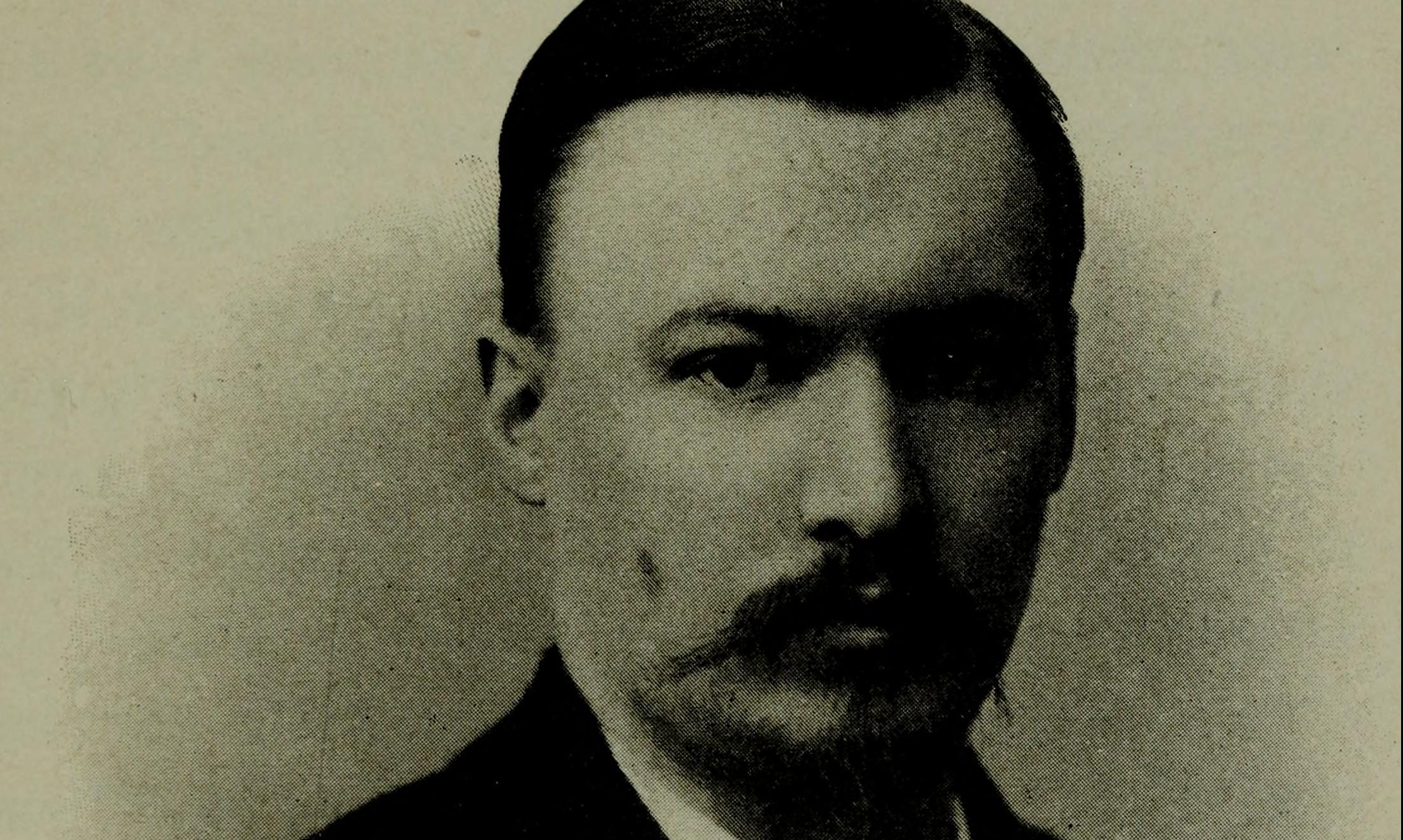
Victor Ewald was born in St. Petersburg and died in Leningrad. Ewald was a professor of Civil Engineering in St. Petersburg, and was also the cellist with the Beliaeff Quartet for sixteen years. This was the most influential ensemble in St. Petersburg in the late 19th century, introducing much of the standard quartet literature to Russia. He also collected and published Russian folk songs. Ewald’s professional life, like that of many of his musical contemporaries, was in an entirely different field; that of a civil engineer, in which he excelled, being appointed in 1900 as professor and manager of the Faculty of Construction Materials at the Institute of Civil Engineers.
Brass players however are indebted to him for something very different – a series of quintets which have become a staple of the repertoire and which represent almost the only, and certainly the most extended examples of original literature in the Romantic style.
The Quintet No. 1 in Bb minor, Op. 5 (1902, rev. 1912) contains 3 movements:
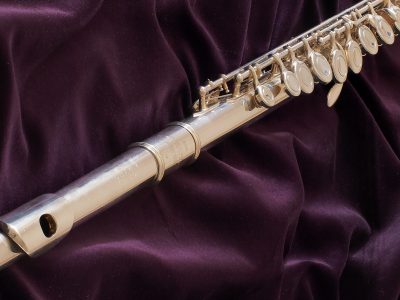
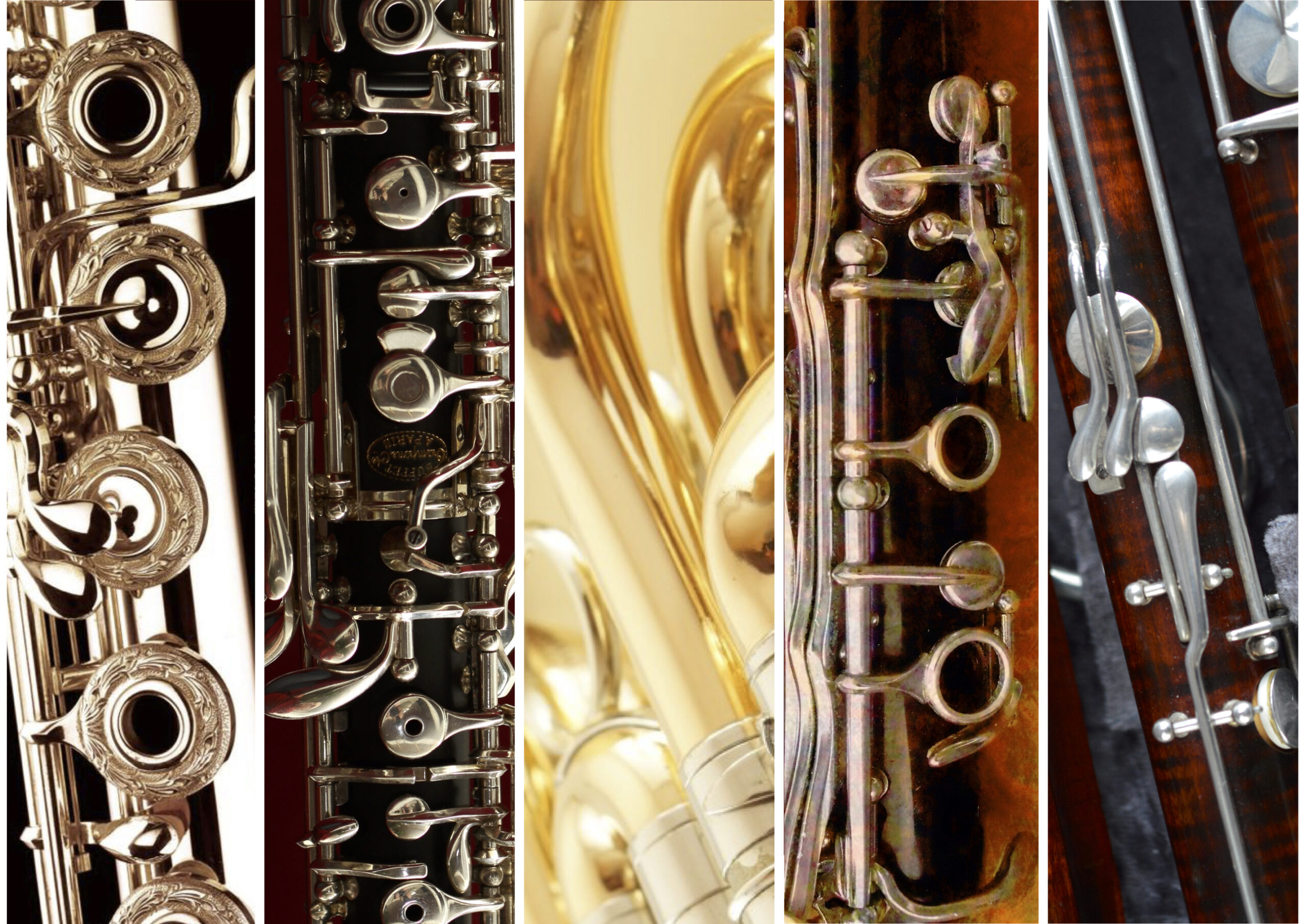
This arrangement is for Flute, Oboe, Clarinet, Horn, Bassoon and Symphonic Orchestra. Now also available for Flute, Oboe, Clarinet, Horn, Bassoon and Windband.
In 1880, Tschaikowsky composed the ‘Capriccio Italien, Opus 45’, as a fantasy for orchestra. He was inspired by a trip he took to Rome, during which he saw the Carnival in full swing, and is reminiscent of Italian folk music and street songs. As these elements are treated rather freely initially he intended this piece to be called ‘Italian Fantasia’. Tschaikowsky even uses as the introduction a bugle call that he overheard from his hotel played by Italian cavalry regiment. Even nowadays, ‘Capriccio Italien’ is still one of Tschaikowsky most popular compositions.
Many see Wagner’s ‘Tristan und Isolde’ as the beginning of the move away from common practice harmony and tonality and consider that it lays the groundwork for the direction of classical music in the 20th century. The ‘Prelude and Liebestod’ is a concert version of the overture and Isolde’s aria ‘Mild und leise’ in the 3rd act. The arrangement was by Wagner himself, and it was first performed in 1862, several years before the premiere of the complete opera in 1865. The ‘Liebestod’ can be performed either in a purely orchestral version, or with a soprano singing Isolde’s vision of Tristan resurrected.
Recorded (live) by Koninklijk Bevers Harmonie Orkest, Beveren-Leie (B) – conducted by Bert Decavel.
Was composed in 2009. I found inspiration for this work in this photo full of atmosphere of a landscape. Without knowing where or what it is or perhaps just because of this lack of knowledge, I could give my fantasy full rein.
I have attempted to translate the atmosphere summoned up by the picture into a musical dream world. The colour tones of a wind orchestra (wind band) are especially suitable for this. The diverse solo passages in the whole orchestra eventually lead to a great climax, after which the work end in silence, as if the landscape of the photo disappears behind the horizon.