Le Carnaval Romain / Hector Berlioz

Le Carnaval Romain / Hector Berlioz

InstrumentationWind Band
Grade5ยฝ
Duration9 minutes
PublisherJanssen Music
Demo Scoreโ†’ Download

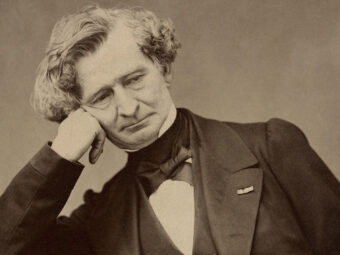
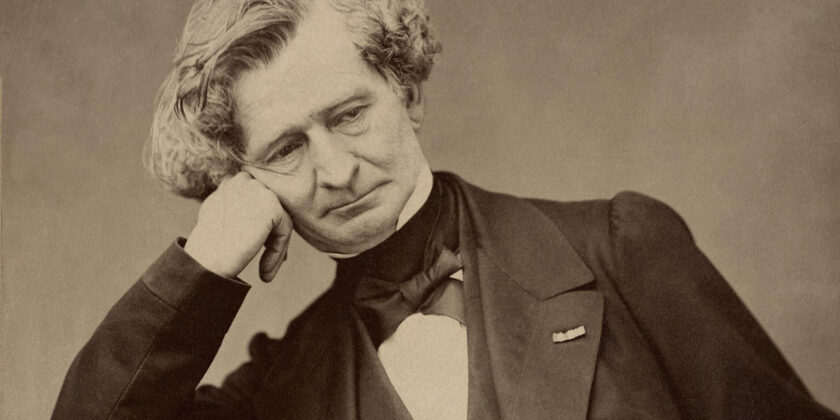
Le Carnaval Romain (Roman Carnival Overture), Op. 9 was composed by Hector Berlioz in 1843 and first performed at the Salle Herz in Paris on 3 February 1844. It is nine minutes of dashing music, orchestrated in Berliozโ€™s brightest colors, originally intended as the prelude to the second act of his opera Benvenuto Cellini. After the more or less debacle of the opera Berlioz reused the music as a stand-alone overture intended for concert performance and was a resounding success.

In this transcription the original color of instrumentation by Berlioz is maintained. 

A great and challenging overture for wind orchestras.


Divertimento

Divertimento

InstrumentationWind Band
Bb solo clarinet
Grade5 – (soloist): 6
Duration16 minutes
PublisherJanssen Music
Demo Scoreโ†’ Bb solo clarinet
โ†’ Demo Score

Divertimento – Full Midi Demo

Divertimento is a concerto for clarinet and wind orchestra freely inspired by portraits of Frans Hals.

Frans Hals (๏นก1582/83 – โœ๏ธŽ 1666) is one of the most important painters from the Dutch Golden Age. He is especially appreciated for his loose touch and lively portraits of contemporaries, genre scenes and colorful militia pieces.

As early as the 17th century, people were struck by the liveliness of Hals’ portraits. Hals’ works contain such power and life that it seems as if the painter “seems to challenge nature with his brush”.

In this Divertimento, the solo clarinet takes us into an imaginary story behind the painting, in which the person in question plays the leading role. After a short introduction, a colorful parade of people and their stories is created based on these portraits;

  1. The Rommel Pot player (1618-22)
  2. The singing girl (1626-30) 
  3. The laughing cavalier (1624) 
  4. The lute player (1623-24) 
  5. The young violin player (1625-30) 
  6. The merry drinker (1630) 
  7. โ€œMalle Babbeโ€ (1633-1635)
  8. A young woman with a glass and flagon (the inn-keeper) (1635) 

Score and Set:


Die schweigsame Frau – Richard Strauss

Die schweigsame Frau – Richard Strauss

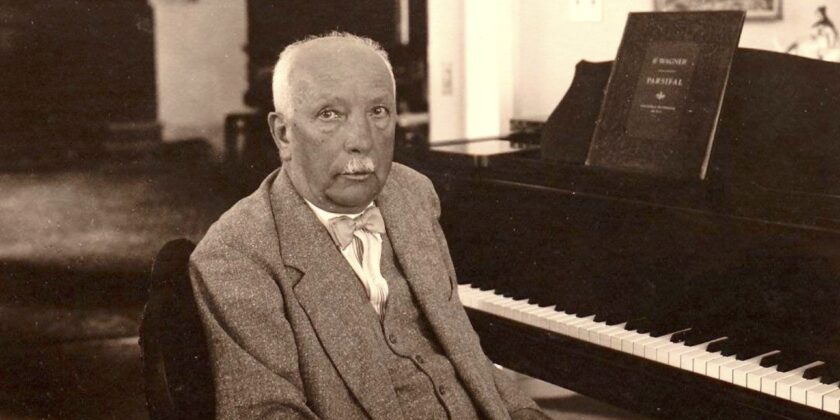
โ€˜Die schweigsame Frauโ€™ (The Silent Woman), is an opera in three acts by Richard Strauss to a libretto by Stefan Zweig. Strauss gave the overture the subtitle โ€˜potpourriโ€™. The term denotes a medley of popular nineteenth-century melodies, ones that brass and coffee-house bands would have typically performed in Straussโ€™s day. Nevertheless, Straussโ€™s overture has little in common really with these; his motifs are brief fragments of melodies, and are often juxtaposed in a masterfully elaborated polyphonic fabric.

Publisher: โ†’ Baton Music

explanation text: ยฉ Baton Music


Der Bรผrger als Edelmann – Richard Strauss

Der Bรผrger als Edelmann – Richard Strauss

โ€˜Der Bรผrger als Edelmannโ€™ is the German title of a play by Moliรจre and an orchestral suite by Richard Strauss. The original French play is called โ€˜Le bourgeois gentilhommeโ€™ and is about a wealthy merchant who would like to become a nobleman. The play was first performed in 1670 with music by Jean-Baptiste Lully. Strauss composed his orchestral suite in 1919 based on the music he had written between 1911 and 1917 for an adaptation of the piece by Hugo von Hofmannsthal. The suite consists of nine movements in which Strauss used some of Lully’s themes, but gave them his own romantic twist.ย 

Publisher: โ†’ Baton Music

explanation text: ยฉ Baton Music


Turandot for Fanfare – Giacomo Puccini

Turandot for Fanfare – Giacomo Puccini

InstrumentationFanfare Band
Grade6
Duration12 minutes
PublisherJanssen Music
Demo Scoreโ†’ Download

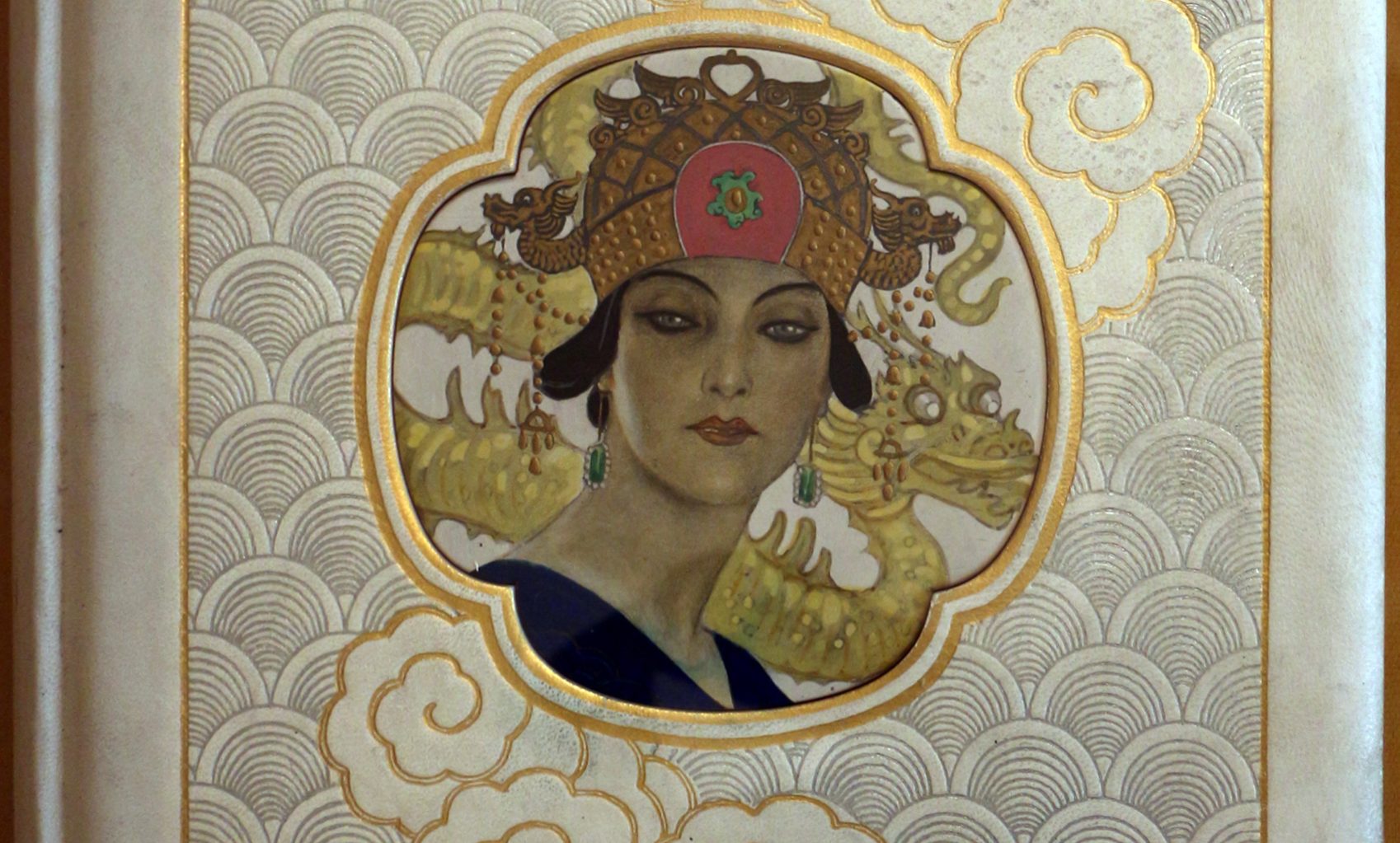
When Pucciniโ€™s opera โ€˜Turandotโ€™ was heard for the first time in April 1926, its composer had been dead for almost a year and a half. Turandot is considered as his best work: Pucciniโ€™s mastery of orchestral sound reaches its pinnacle: this is a ripe, opulent, fin de siรจcle, score, in which deep washes of colour are applied to a profusion of melodic ideas. 

In this arrangement I did use the orchestral material from the opera to make a suite for Fanfare Band.


Le Penseur – (the Thinker)

Le Penseur – (the Thinker)

InstrumentationWind Band
Grade6
Duration13 minutes
PublisherJanssen Music
Demo Scoreโ†’ Download

Le Penseur (Full Midi)

โ†’ contact us for hiring possibilities…

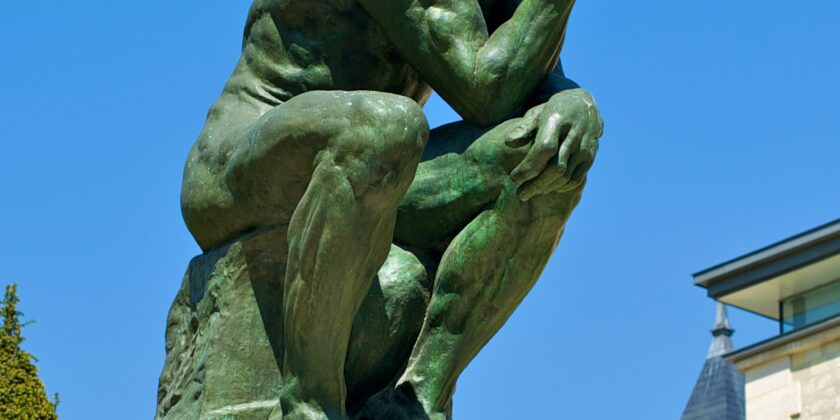
When The Thinker was conceived in its original size (approx. 70 cm) in 1880 as the crowning achievement of The Gates of Hell, seated on the tympanum, it was given the title The Poet. He represented Dante, author of the Divine Comedy who had inspired The Gates, bent over to observe the circles of hell, meditating on his work. The Thinker was therefore initially both a being with a tortured body, almost a damned soul, and a free-thinking man, determined to transcend his suffering through poetry. The pose of this figure owes much to Carpeaux’s Ugolino (1861) and to the seated portrait of Lorenzo de’ Medici carved by Michelangelo (1526-31).

Remaining in place on the monumental Gates of Hell, The Thinker was exhibited individually in 1888, becoming an independent work. The colossal version, enlarged in 1904, proved even more popular: this sculpture of a man lost in thought, but whose powerful body suggests a great capacity for action, has become one of the most celebrated sculptures ever. There are numerous casts worldwide, including the one now in the gardens of the Musรฉe Rodin, a gift to the City of Paris installed outside the Panthรฉon in 1906, and another in the gardens of Rodin’s house in Meudon, on the sculptor’s tomb and his wife.

A challenging composition for wind orchestra based on several “leidmotifs”, written from the perspective of the thinker, who ponders the different emotions and characters of the leitmotifs before coming to a conclusion, but with an open ending, because after all, the thoughts go on againโ€ฆ


Also sprach Zarathustra – Richard Strauss

Also sprach Zarathustra – Richard Strauss

โ€˜Also sprach Zarathustra!โ€™, (โ€˜Thus Spoke Zarathustraโ€™) is a tone poem by Richard Strauss, composed in 1896 and inspired by Friedrich Nietzsche’s philosophical novel โ€˜Thus Spoke Zarathustra!โ€™. The composer conducted its first performance on 27 November 1896 in Frankfurt.

The piece is divided into nine sections played with only three definite pauses. Strauss named the sections after selected chapters of Nietzsche’s novel highlightingย  major moments of the character Zarathustra’s philosophical journey in the novel. The general storylines and ideas in these chapters were the inspiration used to build the tone poem’s structure.


The initial fanfare (โ€˜Sunriseโ€™) became well known after its use in Stanley Kubrick’s 1968 film โ€˜2001: A Space Odysseyโ€™ย  and was also often used as a portent of a significant event to come or regularly used for space-related scenes.

Publisher: โ†’ Baton Music

explanation text: ยฉ Baton Music


The Muses

The Muses

InstrumentationDouble Quintet
(+ Contrabass)
Grade6
Duration12 minutes
PublisherJanssen Music
Demo Scoreโ†’ Download

This composition was commissioned by wind ensemble โ€œHeliconโ€ on the occasion of their 40th anniversary.

From the Heliconian Muses let us begin to sing,

Who hold the great and holy mount of Helicon,

And dance on soft feet about the deep-blue spring

And the altar of the almighty son of Cronos, and,

When they have washed their tender bodies in Permessus

Or in the Horse’s Spring or Olmeius,

Make their fair, lovely dances upon highest Helicon And move with vigorous feet.

From โ€œTheogonyโ€ by Hesiod (ยฑ 715 BC)

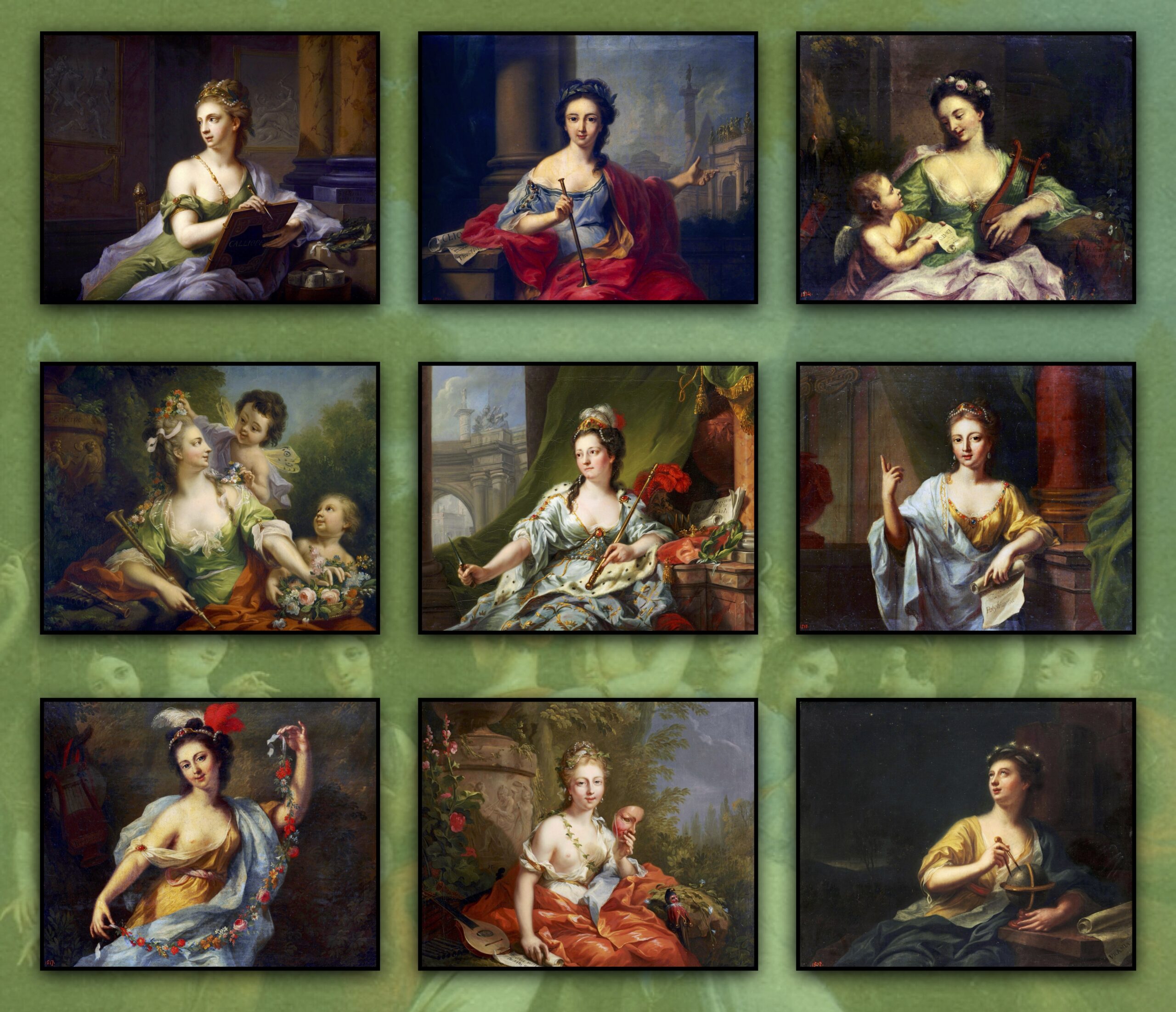
In ancient Greek religion and mythology, the Muses are the inspirational goddesses of literature, science and the arts. Under the care of the god Apollo, they were considered the source of the knowledge embodied in the poetry, lyric songs and myths that were related orally for centuries in ancient Greek culture.


Full Midi Demo

The nine Muses

CalliopeThe beautiful voiceMuse of the heroic epic,
philosophy and rhetoric.
EratoThe lovableMuse of the hymn, the song and the lyricism.
EuterpeThe joyfulMuse of flute playing.
PolyhymniaThe rich in chantsMuse of rhetoric and sacred songs.
KleioThe proclaimingMuse of historiography.
MelpomeneThe singingMuse of song and tragedy.
UraniaThe heavenlyMuse of Astronomy.
TerpsichoreShe who loves to danceMuse of dance and lyrical poetry.
ThaleiaThe festive & floweringMuse of comedy.