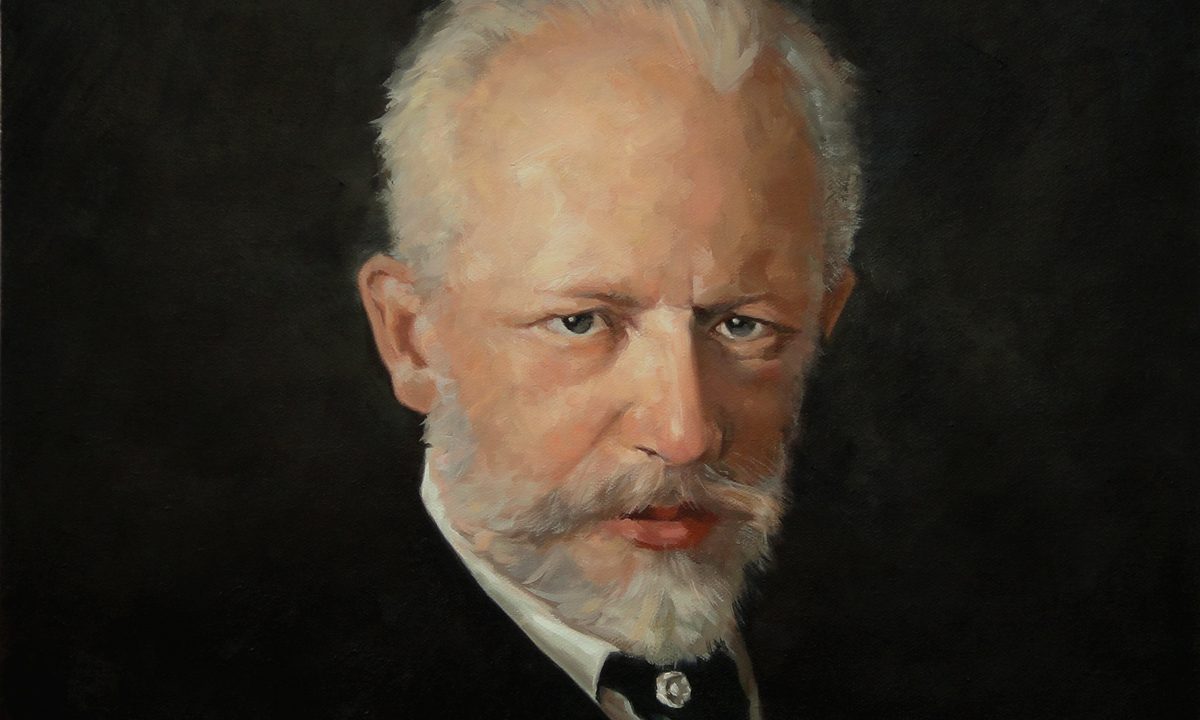
The idea of a ‘Hamlet overture’ had first occurred to Tschaikowsky in 1876. However, by 1888 he had altered these plans when he was asked to write incidental music for a production of Shakespeare’s play. The planned performance was cancelled, but Tschaikowsky decided to finish what he had started, in the form of a concert overture.
The work adopts the same scheme he used in his other Shakespeare pieces, the fantasy-overture ‘Romeo and Juliet’ (1869) and the symphonic fantasy ‘The Tempest’ (1873), in using certain characteristics or emotional situations within the play.
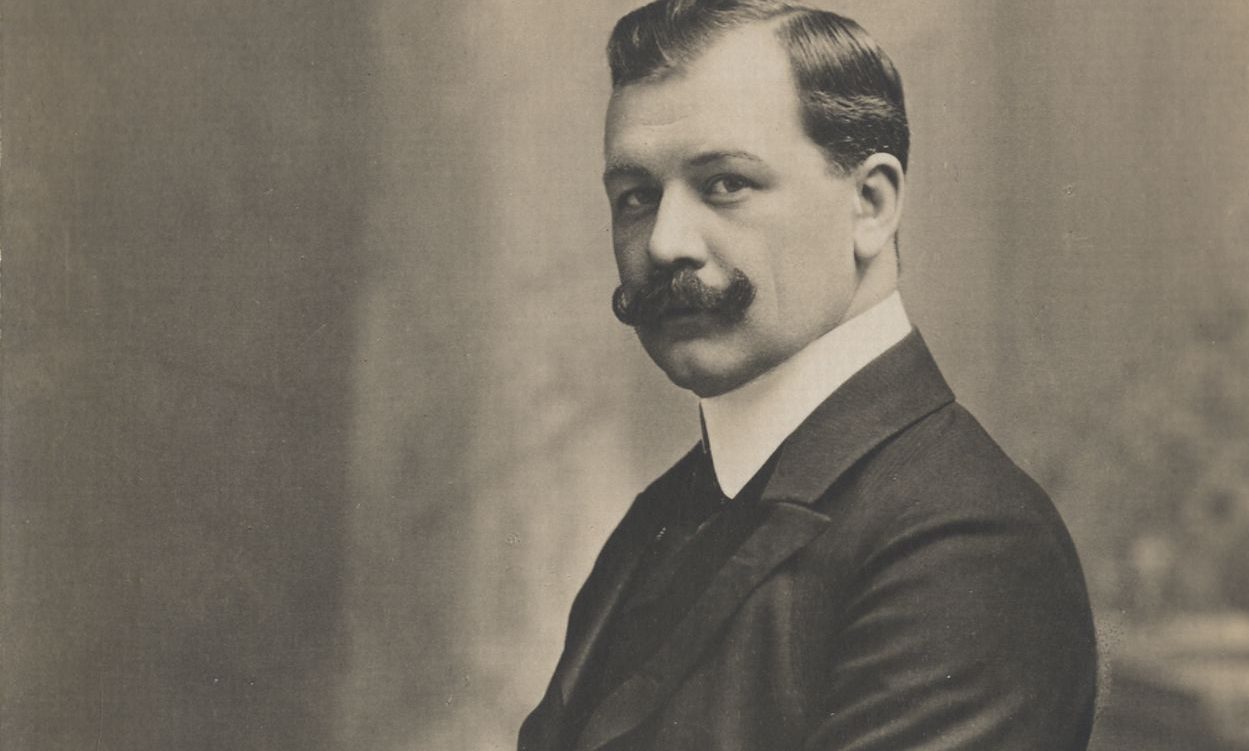
Victor Ewald was born in St. Petersburg and died in Leningrad. Ewald was a professor of Civil Engineering in St. Petersburg, and was also the cellist with the Beliaeff Quartet for sixteen years. This was the most influential ensemble in St. Petersburg in the late 19th century, introducing much of the standard quartet literature to Russia. He also collected and published Russian folk songs. Ewald’s professional life, like that of many of his musical contemporaries, was in an entirely different field; that of a civil engineer, in which he excelled, being appointed in 1900 as professor and manager of the Faculty of Construction Materials at the Institute of Civil Engineers.
Brass players however are indebted to him for something very different – a series of quintets which have become a staple of the repertoire and which represent almost the only, and certainly the most extended examples of original literature in the Romantic style.
The Quintet No. 1 in Bb minor, Op. 5 (1902, rev. 1912) contains 3 movements:
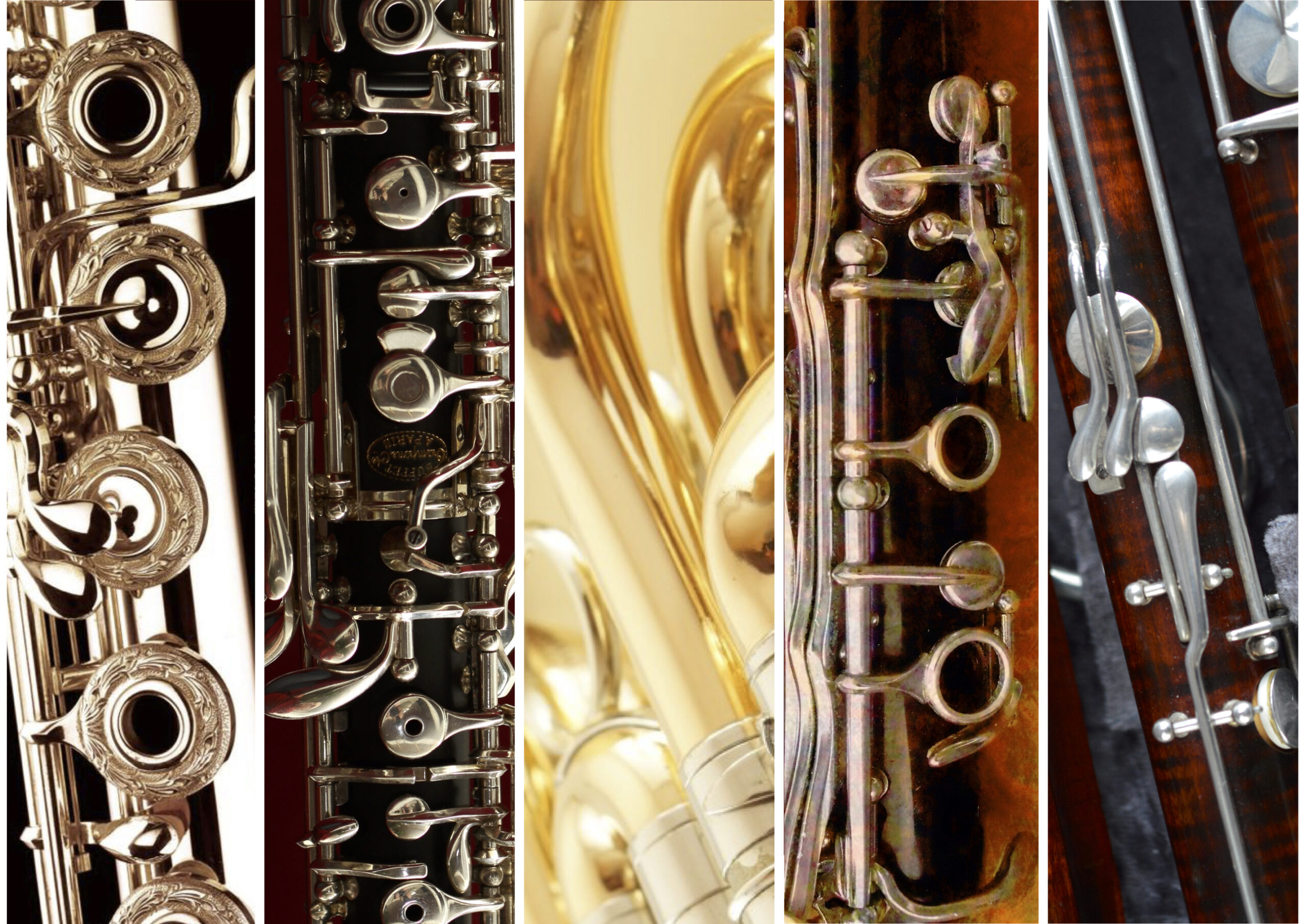
This arrangement is for Flute, Oboe, Clarinet, Horn, Bassoon and Symphonic Orchestra. Now also available for Flute, Oboe, Clarinet, Horn, Bassoon and Windband.
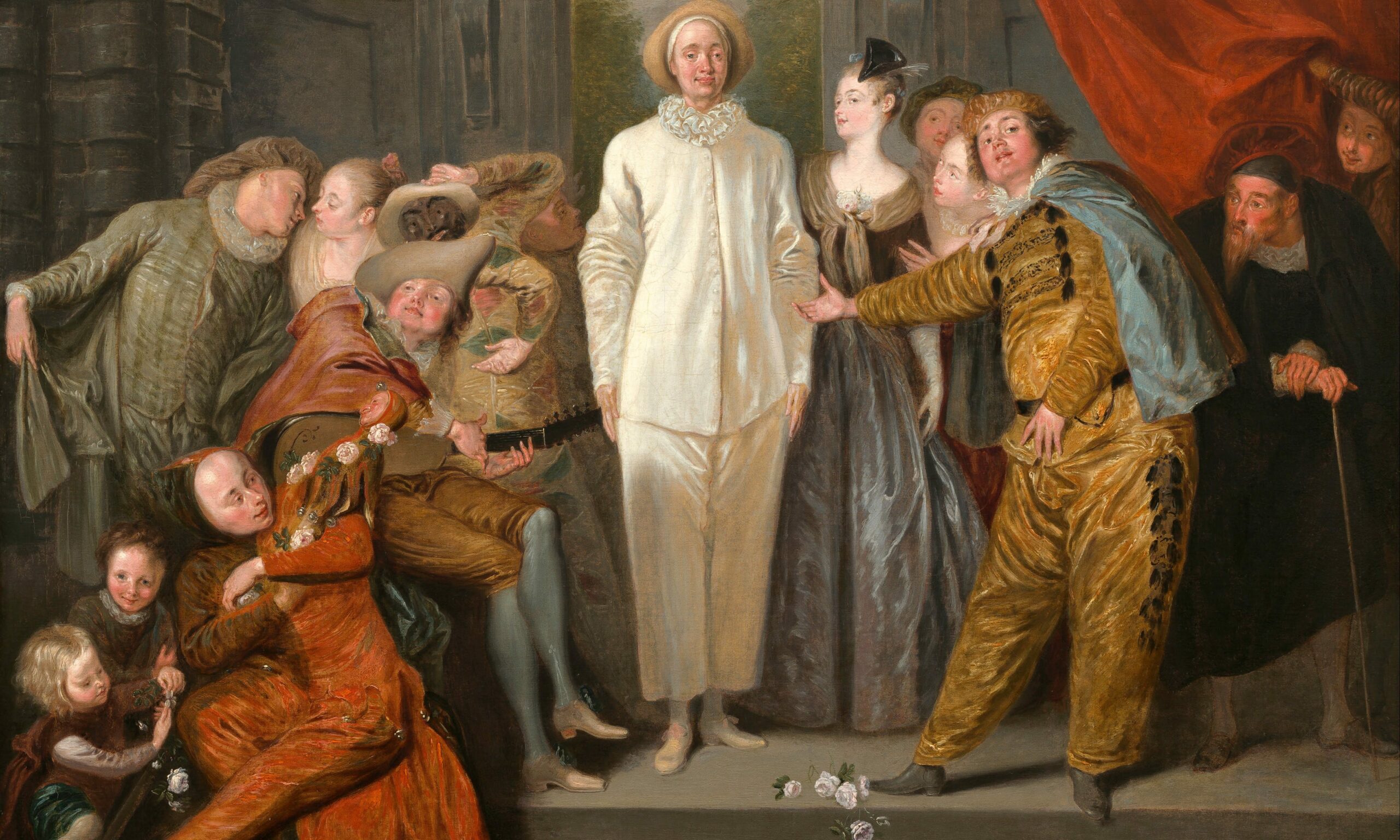
In 1939, Russian composer Dmitri Kabalevsky wrote incidental music for a children’s play called ‘The Inventor and the Comedians’, by the Soviet Jewish writer Mark Daniel. The play was staged at the ‘Central Children’s Theatre in Moscow and was about the German inventor Johannes Gutenberg and a group of travelling buffoons.
The ‘Suite from The Comedians’ is now one of his best known and best-loved works and in particular, the ‘Galop’ from this Suite belongs to Kabalevsky’s most famous pieces.
The Galop from The Comedians is available in a seperate edition.
Rossini’s ‘La Gazza Ladra’ (The Thieving Magpie) is a melodrama or ‘opera semiseria’ in two acts on a libretto by Giovanni Gherardini based on ‘La pie voleuse’ by Jean-Marie-Theodor Badouin d’Aubigny and Louis-Charles Caigniez.
‘La Gazza Ladra’ is best known for the overture, which is musically notable for its use of snare drums. The unique inspiration in the melodies is extreme and invokes the image of the opera’s main subject: a clever, devilishly thieving magpie.
In 1880, Tschaikowsky composed the ‘Capriccio Italien, Opus 45’, as a fantasy for orchestra. He was inspired by a trip he took to Rome, during which he saw the Carnival in full swing, and is reminiscent of Italian folk music and street songs. As these elements are treated rather freely initially he intended this piece to be called ‘Italian Fantasia’. Tschaikowsky even uses as the introduction a bugle call that he overheard from his hotel played by Italian cavalry regiment. Even nowadays, ‘Capriccio Italien’ is still one of Tschaikowsky most popular compositions.
As a composer Lehár started with contributions to the opera-genre but the great triumph of his first operetta ‘Die lustige Witwe’, (The merry widow), in 1905 made him clear that he had to give his talents to the operetta.
‘Die lustige Witwe’ was not only the start of a new flourishing period, it is also one of the absolute highlights in the whole operetta-repertoire.
The operetta originally had no overture but Lehár wrote one for the Vienna Philharmonic to perform at his 70th birthday concert in April 1940.
Many see Wagner’s ‘Tristan und Isolde’ as the beginning of the move away from common practice harmony and tonality and consider that it lays the groundwork for the direction of classical music in the 20th century. The ‘Prelude and Liebestod’ is a concert version of the overture and Isolde’s aria ‘Mild und leise’ in the 3rd act. The arrangement was by Wagner himself, and it was first performed in 1862, several years before the premiere of the complete opera in 1865. The ‘Liebestod’ can be performed either in a purely orchestral version, or with a soprano singing Isolde’s vision of Tristan resurrected.