Tod und Verklรคrung – Richard Strauss

Tod und Verklรคrung – Richard Strauss

Tod und Verklรคrung (Death and Transfiguration), Op. 24, is a tone poem for large orchestra by Richard Strauss.

Strauss began composition in the late summer of 1888 and completed the work on 18 November 1889.

The work is dedicated to the composer’s friend Friedrich Rosch. The music depicts the death of an artist. At Strauss’s request, this was described in a poem by the composer’s friend Alexander Ritter as an interpretation of ‘Tod und Verklรคrung’, after it was composed.

As the man lies dying, thoughts of his life pass through his head: his childhood innocence, the struggles of his manhood, the attainment of his worldly goals; and at the end, he receives the longed-for transfiguration ‘from the infinite reaches of heaven’.

Publisher: โ†’ Baton Music

explanation text: ยฉ Baton Music


Requiem – Giuseppe Verdi

Requiem – Giuseppe Verdi

After Gioachino Rossini’s death in 1868, Giuseppe Verdi suggested that a number of Italian composers collaborate on a Requiem in Rossini’s honor. Unfortunately the project was abandoned by the organisation. But not much later, upon hearing of the death of the Italian writer and humanist Alessandro Manzoni, Giuseppe Verdi resolved to complete a Requiem, this time entirely of his own writing.

The ‘Messa da Requiem’ is a musical setting of the Catholic funeral mass (Requiem) for four soloists, double choir and orchestra. It is rarely performed in liturgy, but rather in concert form of around 85-90 minutes in length.

text: ยฉ Baton Music

Publisher: โ†’ Baton Music

The Planets – Gustav Holst

The Planets – Gustav Holst

‘The Planets’ by English composer Gustav Holst is a seven-movement orchestral suite in which each movement is named after a planet of the Solar System and its corresponding astrological character.

The orchestration is very imaginative and colourful, showing the influence of such contemporary composers as Igor Stravinsky and Arnold Schoenberg, as well as such late Russian romantics as Nikolai Rimsky-Korsakov and Alexander Glazunov.

From its premiere to the present day, the suite has been enduringly popular, influential, widely performed and frequently recorded.

Publisher: โ†’ Baton Music

ยฉ explanation text: baton music 

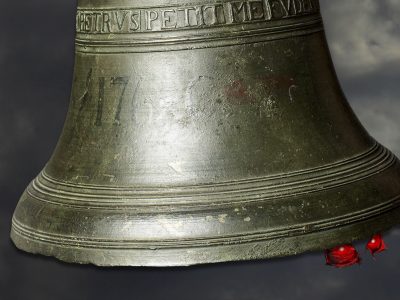
‘t Duvelsklรถkske – the Devils Bell

‘t Duvelsklรถkske – the Devils Bell

Instrumentation:

Grade:

Duration:

Publisher:

Demo score:

wind orchestra

6

10 minutes

Janssen Music

Live recording by “Windband Semper Unitas Sambeek (NL)” – Geert Mooren, conductor


โ€˜De braove pastoor hรข vergeete, zien klukske te zeegnen โ€“ een pienlike zoak.โ€™

The good priest forgot to bless the church bell, a painful matter.โ€™

The devil heard about it and on Christmas Eve, the clock suddenly began to ring hellish. The priest chased the devil. But he took the clock. He buried the clock in the swamp. And still you can hear the bell in Sambeek during the Christmas night.


Duvelsklรถkske (Limburgian dialect)

D’r was ens in Sambek unne brave pastoor, die heuide zien schupkes vol iever. Die bouwde un moi kerkske, en prekte, hoe dukker hoe liever. En hoog in den toore dor hing ie un klok, die klepte ovver wei en akker, as ‘smerges de kuster an ut hennepzeel trok, heel Sambek ja riep hij dan wakker. 

Ma iets toch -mok zegge- was nie in den haok. Den brave pastoor haj vergeete zien klokske te zeegne. Un pienlijke zaok, die um zwaor op ut hart het gezeete. ‘t Was kerstnaacht toen ‘t wonder geval is geschied. ‘t Was wiendstil rondum ‘t haontje, de sterkes lachten zo hoog enzo wied’t was kerstnaacht en hel scheen ‘t maontje. 

Ma heur, dor op ens in ‘t hart van de naacht, begint ‘t vervaorlijk te wejje. De sturmwiend huult woest en mit raozende kracht, en wild got ‘t haontje ant drejje. Och, hoe de pestoor uut ziene sluumer verschrok! Hoe ie zien hart vuulde ontstelle. Nog gekker, dor gut in de tooren de klok an ‘t luie,an ‘t kleppe, an ‘t belle! 

Pestoor loert dur ‘t venster, hoe bonst um ‘t hart! En raoi us, wa zien dor zien ooge? D’n duvel, as ‘t roet van de ketel zo zwart, kumt hoog um den tooren gevlogen. Twee oogen as vuur kieke gluurend int rond, zien start lot ie kronkele en krulle. ‘n Aokelig geschries klinkt zo hels uut zien mond, as of de hel ging an’t brulle. Dan kruupt ie dur ‘t galmgat en griept in ziene bek, ut klokske en vliegt er mit hene. Hej draogt ovver de akkers hin op ziene nek, en toen is ie spoorloos verdweene.

D’r lag in ‘t Sambeks veld een moeras, dor wonde roeke en raave, De Lins hiette ut en begroeid was ut mit gras, dor hettie ut klokske begraave. En iedere Kerstnaacht op slag van 12 uur, al raoze ok sturmigge buujje, Toch kumt er den duuvel mit ooge van vuur, ut Sambekse klokske wer luie.

The Devils Bell

There was a good priest in Sambeek, herding his sheep zealously. He build a beautiful church and preached to his hearts content. And high in the tower he hang a bell, ringing over meadows and fields. As the sacristan pulled the rope every morning, Sambeek was called awake.

But something was not quite right. The good priest forgot to bless the bell. A painful matter, pressing his heart. It was on Christmas eve when it happened. There was no wind, lot of stars laughing high and far and the moon shone bright.

But suddenly, in the middle of the night, the wind starts to blow dangerously. The wind roars fierce and with raging power. The cock on the tower turns wilder and wilder. The pastor is shocked, his heart is running wild. And even crazier, the bell in the tower starts to ring faster and faster.

The pastor looks outside, with pounding heart. And guess what his eyes see. The Devil, as black as soot, flying high around the tower. Two eyes like fire, peeking around, and a tail with twists and curls. A horrible screeching sounds like the roaring hell from his mouth. He crawled through the belfry and engages with its beak the bell and flies away with it. Over the fields around and disappeared.

In Sambeek, there was a swamp. There lived rooks and ravens. The Lins, its called, full of grass. There he has buried the bell. And every Christmas eve at 12 oโ€™clock. Even as the weather is awful. And yet, the Devil with eyes of fire, rings the Church bell of Sambeek. 


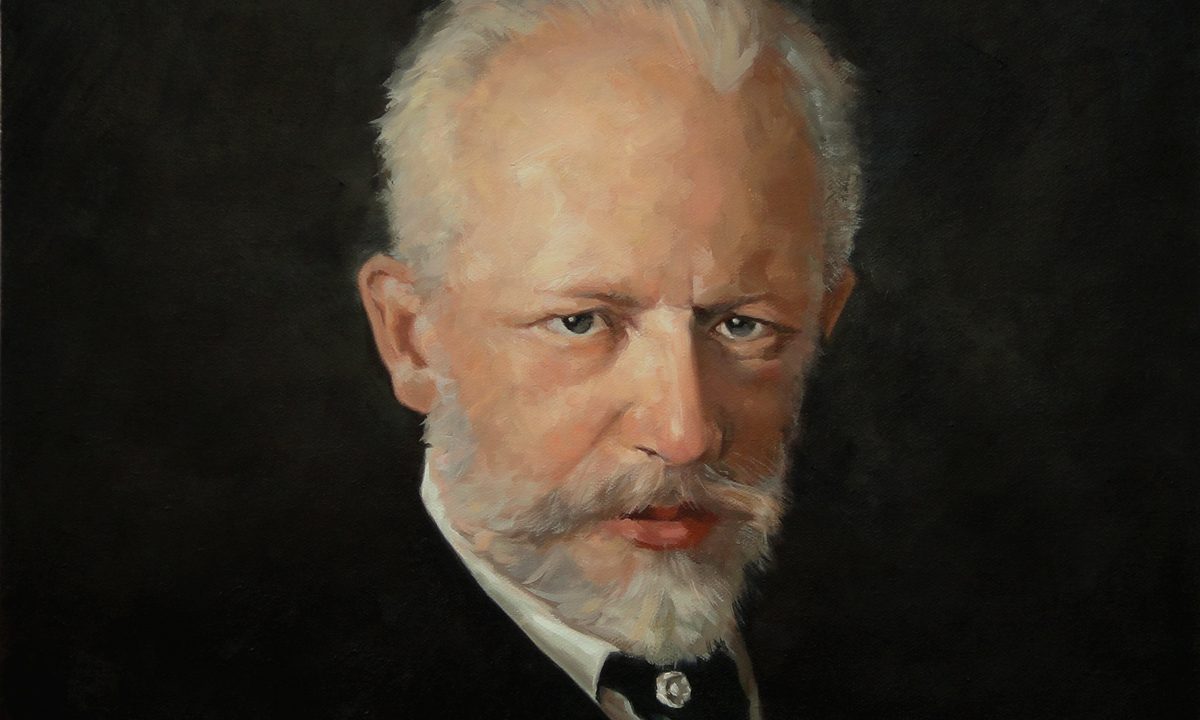
Hamlet – Tschaikowsky

Hamlet – Tschaikowsky

The idea of a ‘Hamlet overture’ had first occurred to Tschaikowsky in 1876. However, by 1888 he had altered these plans when he was asked to write incidental music for a production of Shakespeare’s play. The planned performance was cancelled, but Tschaikowsky decided to finish what he had started, in the form of a concert overture.

The work adopts the same scheme he used in his other Shakespeare pieces, the fantasy-overture ‘Romeo and Juliet’ (1869) and the symphonic fantasy ‘The Tempest’ (1873), in using certain characteristics or emotional situations within the play.

Publisher: โ†’ Baton Music

text:ย ยฉ Baton Music

Capriccio

Capriccio

InstrumentationWind Orchestra
Orchestra
Grade6
Duration14 minutes
PublisherJanssen Music
Demo ScoreOn demand

A capriccio is a piece of music usually fairly free in form and of a lively character. The typical capriccio is one that is fast, intense, and often virtuosic in nature.

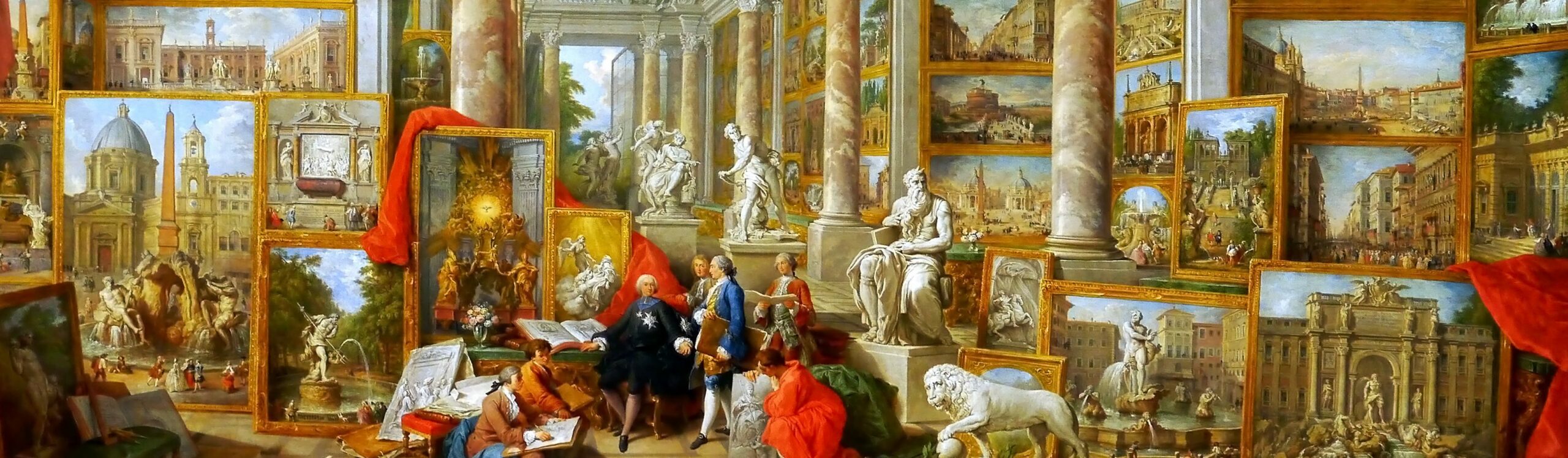
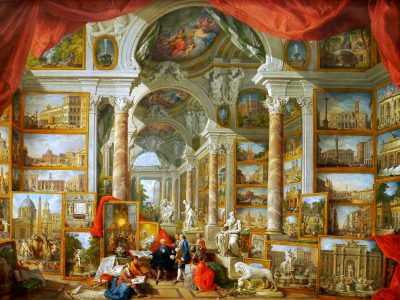
In paintings, a capriccio means especially an architectural fantasy, placing together buildings, archaeological remains and other architectural elements in fictional and often fantastical combinations, perhaps with staffage of figures. It fits under the more general term of landscape painting. It may also be used of other types of work with an element of fantasy.

For this Capriccio I was freely inspired by “Capriccio of Rome” as painted by the Italian painter Giovanni Paolo Pannini (1691-1765) in 1758.

The world first performance took place (November 2015) also in Luxembourg by the European Youth Wind Orchestra conducted by Jan Cober.


Live recording during “Contest 2019 – BBM – Veldhoven (NL)” by Harmonie L’Union Heythuysen (NL), conducted by Erik Somers.

Version for Wind Orchestra:


Version for Symphony Orchestra:


Naughty Limericks – Rodion Shchedrin

Naughty Limericks – Rodion Shchedrin

The ‘Naughty Limericks’ (Concerto for Orchestra No. 1) from Russian composer Rodion Shchedrin creates striking impressions. This one-movement piece is not a ‘Concerto’ in the ‘Bartokian’ sense. ‘Naughty Limericks’ lives up to its title, with a scampering pace and satirical harmonies strongly reminiscent of Shostakovich in his ironic mode, and to a lesser extent of Prokofiev. ‘Naughty Limericks’ is an imprecise translation of Shchedrin’s title – but it captures the concerto irreverent zest. It’s a brilliantly composed work which is well worth of concert exposure.

Publisher: โ†’ Baton Music
Demo score: โ†’ Naughty Limericks

Alborado del Gracioso – Maurice Ravel

Alborado del Gracioso – Maurice Ravel

Around 1900, Maurice Ravel joined a group of innovative young artists, poets, critics, and musicians referred to as Les Apaches or “hooligans”, a term coined by Ricardo Viรฑes to refer to his band of “artistic outcasts”. To pay tribute to his fellow artists, Ravel began composing Miroirs in 1904 and finished it the following year. Miroirs has five movements, each dedicated to a member of Les Apaches. 

Ravel composed Alborada del Gracioso (4th part of Miroirs) as a piano piece in 1905, and is one of the three pieces which he later transcribed for full orchestra, immediately became one of his most popular works. The original piano version, with its impossibly fast repeated notes (it remains a challenge to all but the most skilled pianists), is so rich and evocative that orchestrating it must have seemed redundant at first. But, perhaps more than any musician of his time, Ravel had an extraordinary ear for sonority and color. 

Alborada means morning music, just as serenade means night music.  In the common Spanish tradition, itโ€™s simply any music performed at daybreak, often to celebrate a festival or honor a person โ€” or both. To his Alborada, however, Ravel adds del gracioso, clouding the picture with the introduction of the standard grotesque lover, akin to Don Quixote of ancient Castillian comedy. 

Publisher: โ†’ Baton Music