Manon Lescaut Suite / Giacomo Puccini

Manon Lescaut Suite / Giacomo Puccini

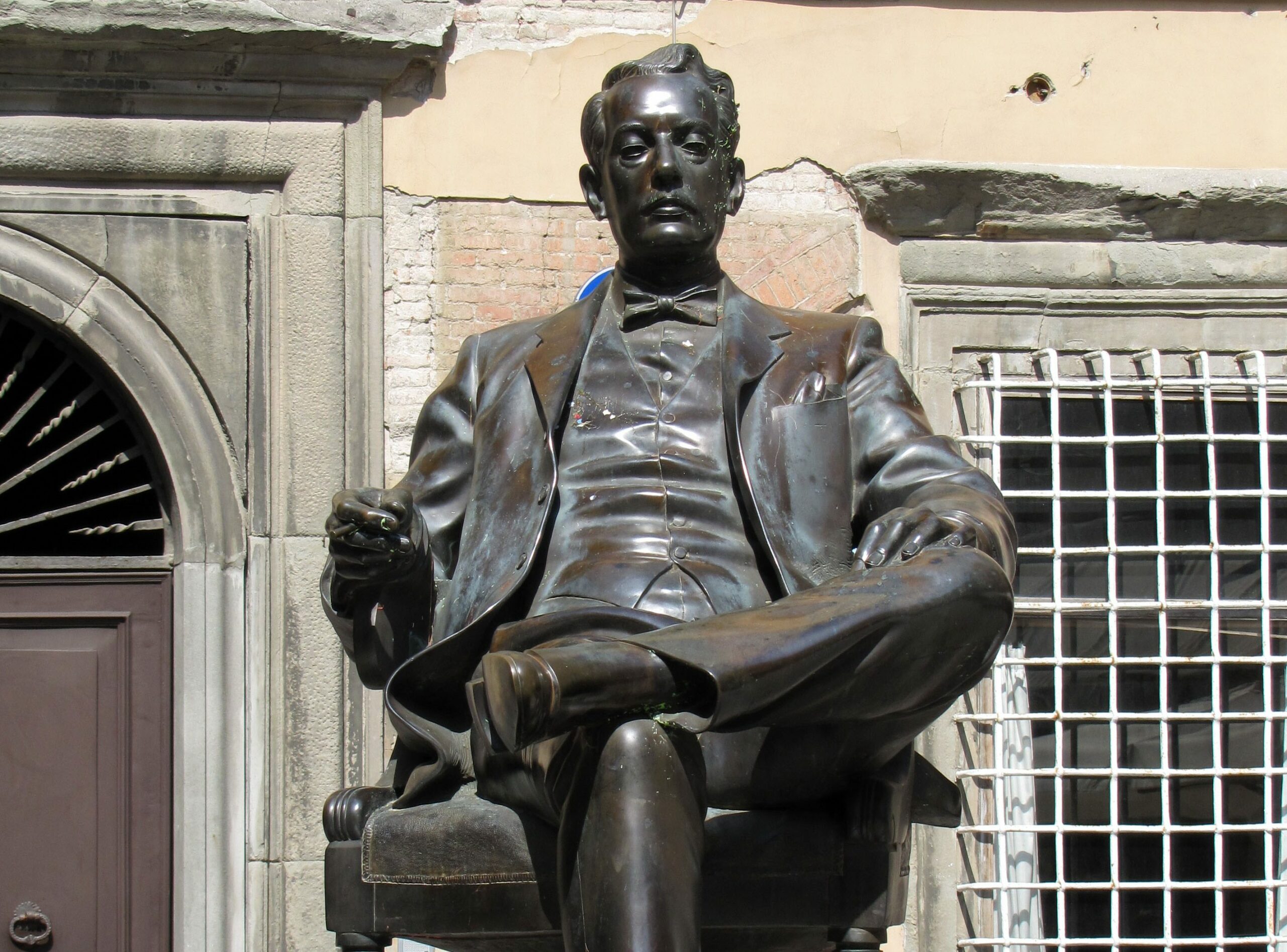
Giacomo Puccini composed his opera ‘Manon Lescaut’ in 1893 and it became together with ‘Tosca’ his first outstanding success. ‘Manon Lescaut’ is a devastating depiction of a woman wrestling with her desire for love on her own terms, and the rigid double standards imposed on her by society. The opera was a breakthrough hit for Puccini, and is packed with memorable music and heartbreaking drama. This suite contains some of the most beautiful music from ‘Manon Lescaut’ to compile a small suite for Symphonic Band.

Publisher: → Baton Music

explanation text: © www.batonmusic.nl


Schlagoberswalzer / Richard Strauss

Schlagoberswalzer / Richard Strauss

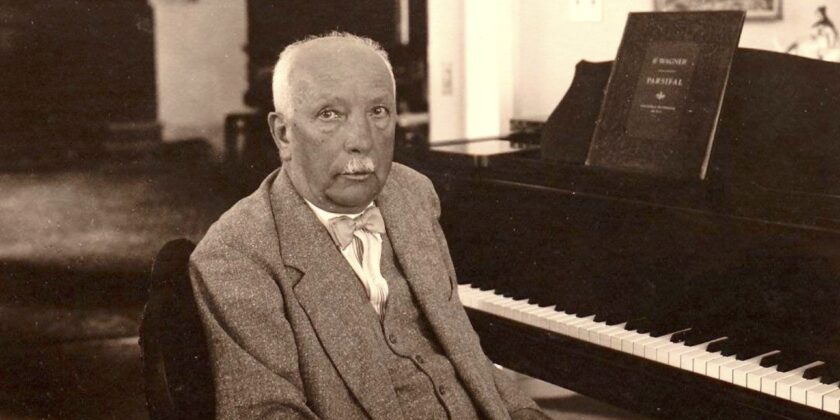
‘Schlagobers’ (‘Whipped Cream’), Op. 70, is a ballet in two acts with a libretto and score by Richard Strauss. Composed in 1921–22, it was given its première at the Vienna State Opera on 9 May 1924. Despite the fact that both the ballet and the later compiled suite were not an unqualified success, the ballet contained, according to the critics, at least a superb waltz. Nowadays we regularly find this ‘Schlagoberswalzer’ on all the major concert stages and it lives up to the title. Dutch arranger Christiaan Janssen transcribed this beautiful waltz now for Symphonic Band.

Publisher: → Baton Music

© explanation text: www.batonmusic.nl


Die schweigsame Frau / Richard Strauss

Die schweigsame Frau / Richard Strauss

‘Die schweigsame Frau’ (The Silent Woman), is an opera in three acts by Richard Strauss to a libretto by Stefan Zweig. Strauss gave the overture the subtitle ‘potpourri’. The term denotes a medley of popular nineteenth-century melodies, ones that brass and coffee-house bands would have typically performed in Strauss’s day. Nevertheless, Strauss’s overture has little in common really with these; his motifs are brief fragments of melodies, and are often juxtaposed in a masterfully elaborated polyphonic fabric.

Publisher: → Baton Music

explanation text: © Baton Music


Der Bürger als Edelmann / Richard Strauss

Der Bürger als Edelmann / Richard Strauss

‘Der Bürger als Edelmann’ is the German title of a play by Molière and an orchestral suite by Richard Strauss. The original French play is called ‘Le bourgeois gentilhomme’ and is about a wealthy merchant who would like to become a nobleman. The play was first performed in 1670 with music by Jean-Baptiste Lully. Strauss composed his orchestral suite in 1919 based on the music he had written between 1911 and 1917 for an adaptation of the piece by Hugo von Hofmannsthal. The suite consists of nine movements in which Strauss used some of Lully’s themes, but gave them his own romantic twist. 

Publisher: → Baton Music

explanation text: © Baton Music


Turandot for Fanfare / Giacomo Puccini

Turandot for Fanfare / Giacomo Puccini

InstrumentationFanfare Band
Grade6
Duration12 minutes
PublisherJanssen Music
Demo Score→ Download

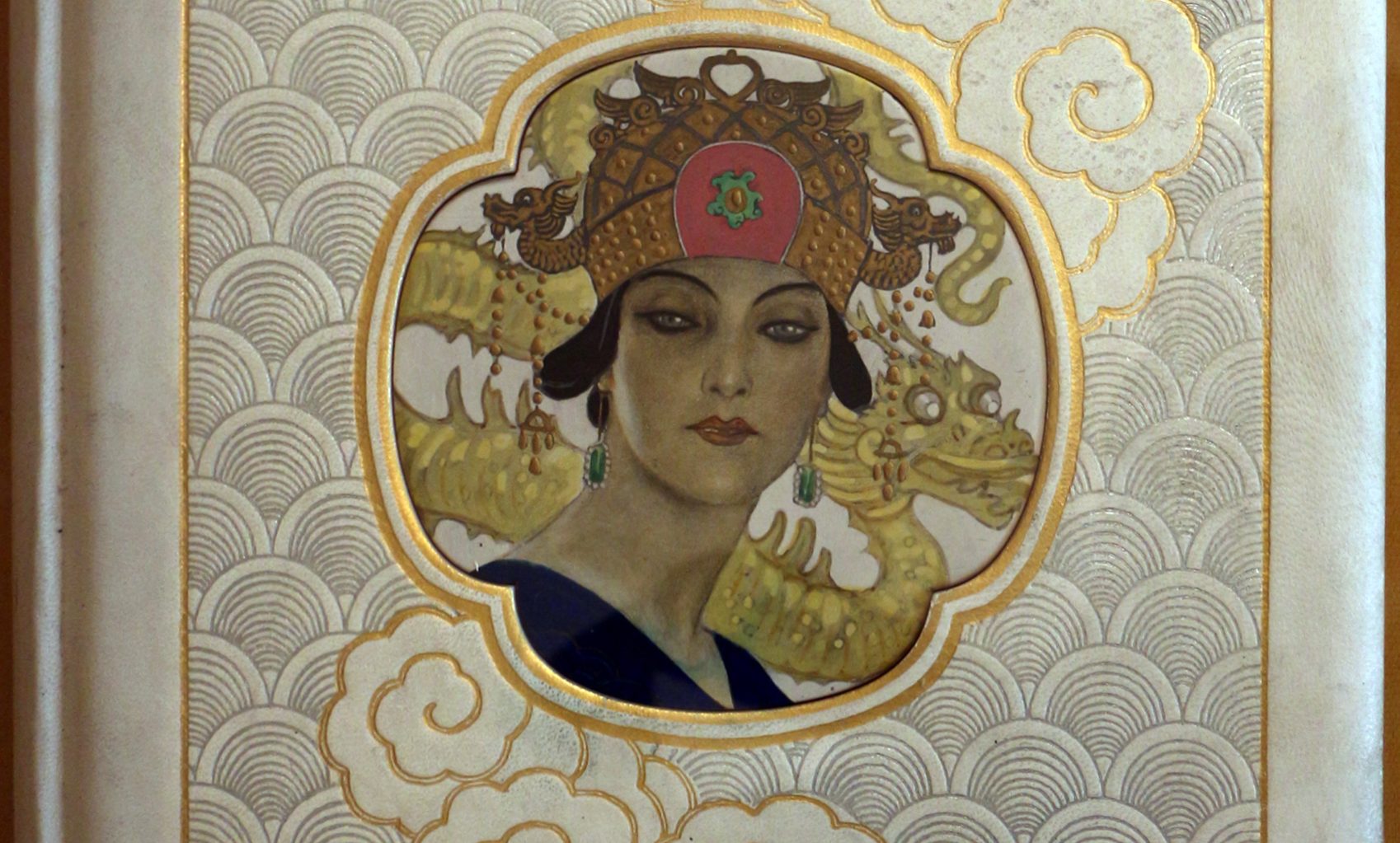
When Puccini’s opera ‘Turandot’ was heard for the first time in April 1926, its composer had been dead for almost a year and a half. Turandot is considered as his best work: Puccini’s mastery of orchestral sound reaches its pinnacle: this is a ripe, opulent, fin de siècle, score, in which deep washes of colour are applied to a profusion of melodic ideas. 

In this arrangement I did use the orchestral material from the opera to make a suite for Fanfare Band.


Also sprach Zarathustra / Richard Strauss

Also sprach Zarathustra / Richard Strauss

‘Also sprach Zarathustra!’, (‘Thus Spoke Zarathustra’) is a tone poem by Richard Strauss, composed in 1896 and inspired by Friedrich Nietzsche’s philosophical novel ‘Thus Spoke Zarathustra!’. The composer conducted its first performance on 27 November 1896 in Frankfurt.

The piece is divided into nine sections played with only three definite pauses. Strauss named the sections after selected chapters of Nietzsche’s novel highlighting  major moments of the character Zarathustra’s philosophical journey in the novel. The general storylines and ideas in these chapters were the inspiration used to build the tone poem’s structure.


The initial fanfare (‘Sunrise’) became well known after its use in Stanley Kubrick’s 1968 film ‘2001: A Space Odyssey’  and was also often used as a portent of a significant event to come or regularly used for space-related scenes.

Publisher: → Baton Music

explanation text: © Baton Music


Symphonie pour Orgue et Orchestre / Charles Widor

Symphonie pour Orgue et Orchestre / Charles Widor

Charles Widor

Born in 1844, he soon became involved in organ music from home. He received organ lessons from his father and did so well that he was allowed to replace him when he was eleven years old. In 1863, on the advice of the French organ builder Aristide Cavaillé-Coll, he moved to Brussels to study with Jacques- Nicolas Lemmens.

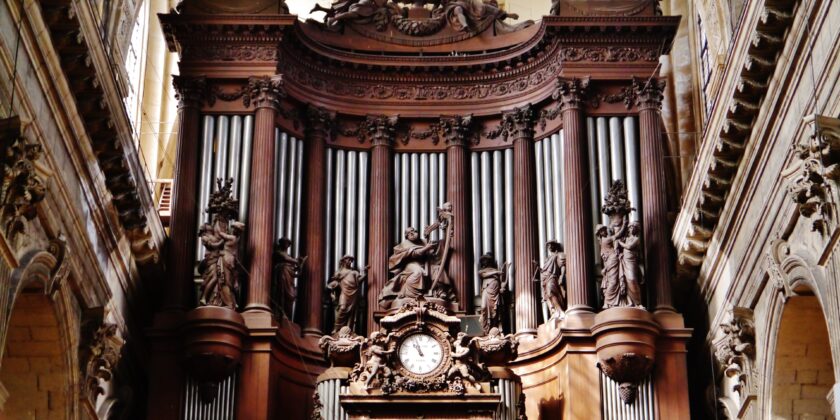
In 1870 he moved to Paris to become organist for 64 years at Saint-Sulpice, where the organ builder Cavaillé-Coll had placed his largest instrument. With one of the top organs to himself, he thought it was time to write a ‘new’ kind of organ music, the so-called organ symphony.

With his 10 symphonies he pushed both the organist and the organ to extremes. He was also a good pedagogue, passing on his knowledge as teacher of organ and composition at the Conservatoire de Paris.

Symphonie pour Orgue et Orchestre

In 1880, the future king of England, Edward VII, requested that Widor compose a grand work for organ and orchestra to be performed in London’s Royal Albert Hall.

Using movements from his second and sixth symphonies for solo organ as the basis, Widor created a masterpiece that launched a renaissance in the organ/ orchestra combination, a legendary tour de force to the repertory for organ and orchestra.

This transcription was commissioned by Wind Orchestra Auletes Eindhoven (NL).